

















Automating secure identity verification
Objectives


Why Unisys?
- Deep understanding of the agency's specific requirements
- Ability to balance technological advancement with privacy considerations
- A suite of identity-based cybersecurity solutions tailored to highly regulated public sector organizations
- Commitment to systems that can grow with the agency and connect easily with existing tools
Solution
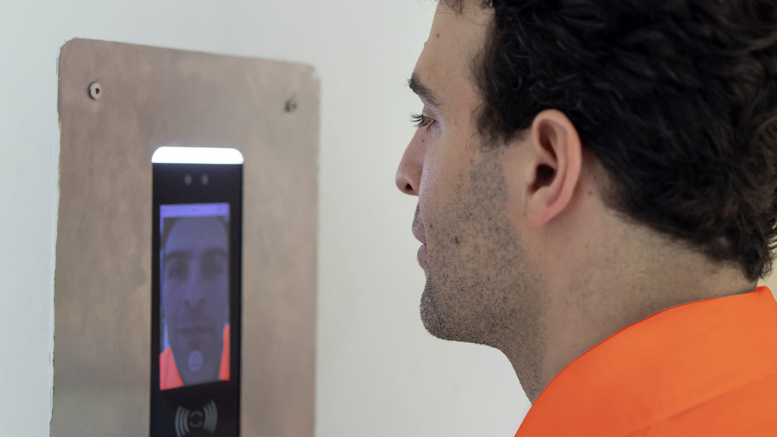
Unisys Corrections Identity solution built on Stealth(identity)™ is a proven identity management technology that integrates multimodal biometrics (in this case, face and iris recognition) for secure touchless verification at key checkpoints and improved visibility for staff to:
- Review and compatibility assessment of 64 unique processes
- Network connectivity validation with firewall updates and end-to-end testing
- Full migration of integrations from on-premises to AWS
- Deployment across production, development and test environments
- Fully managed platform operations with CloudOps, SecOps and FinOps services
Results and benefits
- Provided a fast, secure, reliable entry and exit for inmates, visitors and staff, preventing unauthorized entries and bottlenecks
- Boosted staff morale and efficiency by reducing the administrative burden and streamlining operations
- Reduced contraband smuggling, increased visibility into activity throughout the facility and faster emergency response with real-time tracking
- Helped visitors feel safer and more at ease, motivating families to visit more frequently

97%
reduction in identification time, from 3 minutes to 5 seconds
80%
reduction in enrollment time, from 10 minutes to 2 minutes
100%
adoption among staff
The urgency of identity in corrections
The agency recognized the need to modernize its outdated fingerprint-based identification systems to improve security and operational efficiency across correctional facilities. Leadership aimed to implement a reliable biometric solution that streamlines identification, reduces administrative burdens, and addresses challenges like staffing shortages and inconsistent processes. Achieving this vision required a partner with expertise in both technical complexities and the human aspects of correctional management.

The agency's existing technology included various biometric capture devices and matching engines, which faced significant limitations in integration and scalability. Earlier verification tools required extra steps, precise positioning and multiple attempts. They slowed down movement across facilities, creating space for a more intuitive and streamlined approach.
After evaluating potential solutions, the agency partnered with Unisys to implement facial and iris recognition technologies across 16 correctional centers. Together, the agency and Unisys set a clear objective: introduce technology that accelerates identification, strengthens security and supports a more respectful experience for everyone.
Unisys began by thoroughly understanding the agency's specific requirements before proposing the Corrections Identity solution as the foundation of the agency's biometric identification system (BIS). This solution, built on Stealth(identity)™, a proven identity management technology, incorporates industry-leading matching engines and biometric capture devices, thereby creating a system capable of expanding with new technologies.
The implementation focused on face and iris biometrics due to their speed, accuracy and ease of use. Recent advances have improved facial recognition technology to near fingerprint–matching accuracy, while iris recognition has proven to be reliable within correctional environments.
A key step in the implementation involved carrying forward all existing facial images and iris templates, allowing the new BIS to build on proven data without disrupting operations. The team designed the capture unit to accommodate individuals of various heights, including those using wheelchairs, ensuring accessibility for all.
The Unisys solution combines facial and iris recognition to deliver fast, contactless verification while enhancing security. The platform cuts identification time from minutes to seconds, saves thousands of staff hours and creates a more dignified experience for everyone, all while reducing operational costs by 12%.
Beyond security, the system provides significant benefits to humans. Shorter wait times and faster movement through checkpoints help create a calmer, more predictable experience for inmates, staff and visitors. The technology enables consistent family visits, a crucial factor in inmate rehabilitation and mental health.
The reduced administrative burden allows staff to focus on higher-value tasks that improve facility management and inmate care. The biometric system's contactless design provides a more dignified and modern experience that respects the needs of everyone who enters the facility.
The implementation has delivered measurable improvements to daily operations. Enrollment time has dropped from 10 to just 2 minutes, an 80% improvement. Identification now takes only 5 seconds, dramatically reducing bottlenecks compared to the previous 2–3 minutes.
These efficiency gains have saved an estimated 3,800 staff hours over a 12-month period, allowing correctional officers to focus on security and inmate management rather than administrative tasks. Since going live in September 2024, the system has processed 107,000 identifications, with approximately 3,000 individuals enrolled.
A 100% adoption rate among correctional officers highlights the system's intuitive design and the staff's quick adoption of its benefits. The agency has also realized a 12% reduction in operational costs by optimizing workflows and minimizing resource-intensive manual checks.
This modernization positions the agency to strengthen both its security and rehabilitation goals with a more capable, adaptable foundation. With a modern, scalable infrastructure and enhanced biometric capabilities, the focus can shift from processing to purpose, creating environments that support the well-being of everyone within the correctional system.
The collaborative partnership between the agency and Unisys demonstrates how public sector organizations can achieve meaningful digital transformation while addressing operational and human needs. Through thoughtful implementation and a shared vision, the agency and Unisys built a technology foundation that supports a safer, more efficient and more humane correctional system.