

















Three keys to realizing expected TCO on hyperautomation initiatives
November 17, 2022 / Anthony Martucci
Short on time? Explore the key takeaways:
- Don’t just leap into a hyperautomation project. Pause to see the big picture – what needs to be done horizontally and across functional areas to improve the business and maximize ROI and TCO.
- Do create fusion teams where business and IT representatives work together to define the ultimate goal clearly, and then build toward it, one small step at a time.
- Do engage IT to provide the guardrails and governance to ensure process scalability, technology reuse, and enterprise-grade security and compliance.
- Do create shared KPIs to monitor, measure and reward success. People need incentives for siloed and cross-functional efforts. This could include shared KPIs around automation tied to bonuses to drive behavior.
Organizations are accelerating their digital transformation plans in today's digital-first world by hyperautomating IT and business processes. A top trend in Gartner’s Top Strategic Technology Trends for 2022, hyperautomation enables the automation of business processes by harnessing multiple advanced technologies. When it’s used to automate processes end-to-end across departmental silos, it’s a proven pathway to real digital transformation – the kind that can radically reduce operational costs and improve efficiencies, transform employee and customer experiences, drive growth and more.
But currently, most hyperautomation initiatives aren’t delivering the value or total cost of ownership (TCO) that companies expect – even when they harness artificial intelligence (AI) and machine learning (ML). This is particularly ironic on the TCO front, as these initiatives are supposed to be saving companies money. What’s going on?
In the report, Gartner predicts that “by 2024, diffuse hyperautomation spending will drive up the total cost of ownership 40-fold, making adaptive governance a differentiating factor in corporate performance.” Let’s explore what’s driving up TCO – and how you can avoid having your next initiative become a statistic.
The roots of the problem
Most TCO issues start when someone at the top mandates, “We need to take X amount of cost out of the business; go automate” – usually before the end of the next quarter. This mandate quickly cascades across the various lines of business, is turned into “department-specific cost-cutting goals,” and is realized through rushed, siloed hyperautomation initiatives, as shown in Figure 1.
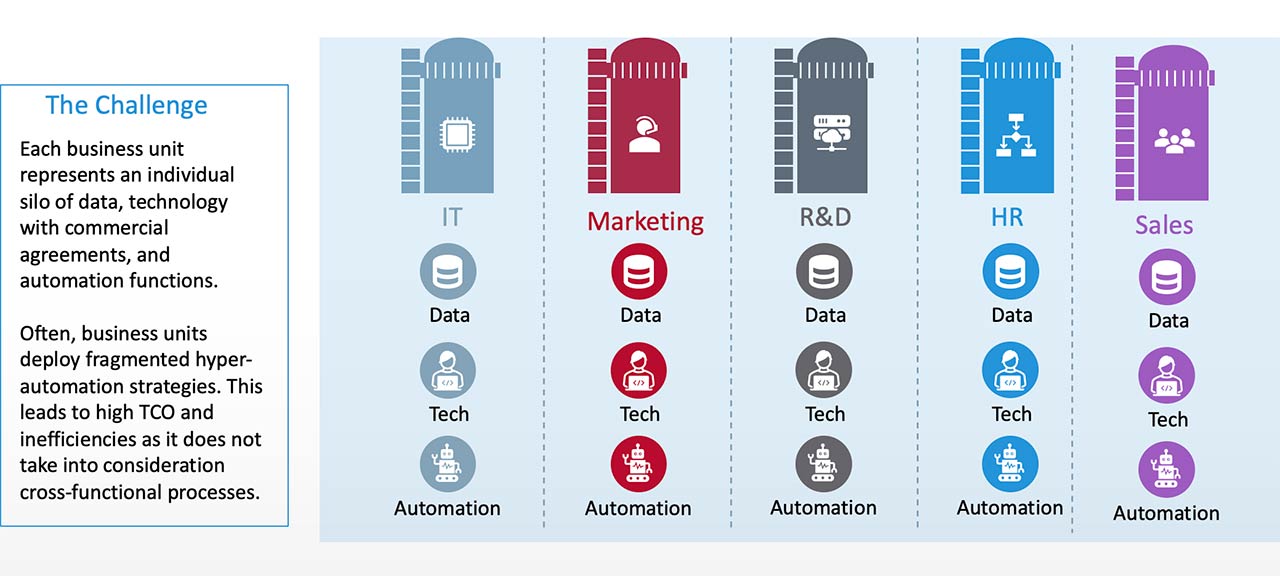 Figure 1: Siloed hyperautomation reinvents the wheel and creates costly IT landscape complexity.
Because companies are organized in silos with profit and loss (P&L) accountability, this default makes perfect sense. But hyperautomation – the kind that really delivers value to the business and reduces TCO – is a cross-functional endeavor that automates an end-to-end process – a “journey” (or path) through your business’s process landscape. For example, an end-to-end process can also be something like “new employee onboarding,” which can span many functional areas (see Figure 2).
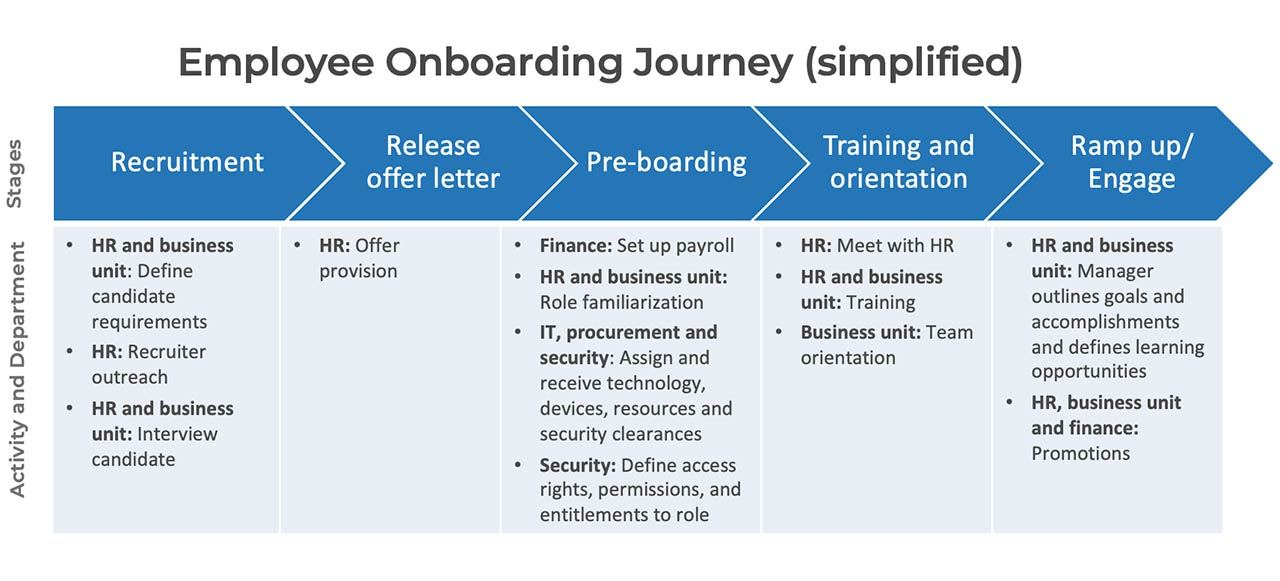 Figure 2: Transformative hyperautomation transcends departmental silos.
In this example, you can see that onboarding touches many functional areas, not just HR, which still plays a leading role. As this example illustrates, even everyday processes like new employee onboarding happen dynamically across different lines of business.
If no one takes an enterprise-wide view of automation across them, and there are no incentives for functions to focus on the end-to-end process or automate in a standardized, consistent way, it rarely happens organically. Teams tend to focus on their function’s sub-processes rather than on how to connect all related tasks as part of an end-to-end process spanning multiple departments. This tendency results in islands of automation that deliver far less value to the business than a connected enterprise-wide process. The work is often done without the guardrails of centralized IT governance, such as security, compliance and standardization. So over time, the enterprise IT landscape gets more complicated and diverse, with overlapping technologies, tools and platforms.
The result is a “Wild West” of fragmented automation approaches and technologies. All this lack of coordination, technology standardization and chaos creates inefficiencies that can potentially drive up TCO.
Who wants that? No one.
The answer is centralization and incentivization
So, what’s the answer? With hyperautomation all the rage, how can your organization avoid becoming a troubling statistic? The answer is by centralizing your hyperautomation strategy using cross-functional fusion teams and creating shared KPIs tied to participants’ bonus structure (see Figure 3).
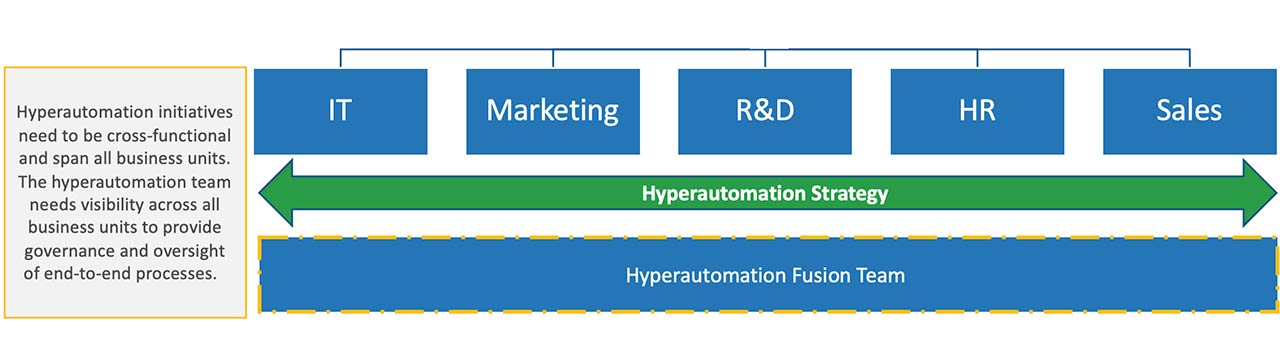 Figure 3: Everyone wins with a centralized, holistic approach to hyperautomation.
Unlike traditional centers of excellence that can quickly become ivory tower teams disconnected from business goals, fusion teams are led by IT experts. But they also include people from all functional areas who rotate in and provide the essential business context needed for hyperautomation initiatives. No one knows business processes, needs and priorities more than those working within business units daily. Their insights are vital because if IT can’t answer the question, “What does the business hope to accomplish with this automation project and why?” IT needs to pause and figure it out.
Above this team is a governance layer that includes executive C-level stakeholders, program management and senior engineering and security leadership. This layer:
- Drives the overall hyperautomation strategy, ensuring there’s always a focus on the most impactful, end-to-end use cases
- Provides the benefits of structure, governance and technical approaches to ensure security, scalability, compliance, flexible integrations and more
- Tracks the ROI, TCO and relevant business and technical KPIs to measure business impact
- Looks for ways to drive reuse because they are a cost center
Four hyperautomation dos and don’ts
Hyperautomation projects done right require lots of strategizing and planning upfront. But the outcomes for this time have massive pay-offs. At the same time, you’ll avoid falling into the costly trap of diffused, siloed approaches to hyperautomation that wreck long-term TCO. Therefore, consider these “dos and don’ts” as you form your hyperautomation strategy:
- Don’t just leap into a hyperautomation project. Pause to see the big picture – what needs to be done horizontally and across functional areas to improve the business and maximize ROI and TCO.
- Do create fusion teams where business and IT representatives work together to define the ultimate goal clearly, and then build toward it, one small step at a time.
- Do engage IT to provide the guardrails and governance to ensure process scalability, technology reuse and enterprise-grade security and compliance.
- Do create shared KPIs to monitor, measure and reward success. People need incentives for siloed and cross-functional efforts. This could include shared KPIs around automation tied to bonuses to drive behavior.